

Choosing outdoor heating equipment involves more than comparing size or appearance. Fuel type, construction, spark control, ash removal, and the intended location all influence how comfortably and safely a fire feature can be used. Anyone comparing fire pit options should first consider how the space will be used, how much maintenance is acceptable, and what local fire regulations require. Against that background, SUNJOY offers several outdoor fire features, including wood-burning fire pits, outdoor fireplaces, smokeless models, and propane fire pit tables, giving shoppers different formats to compare.
Start With The Fire And Fuel Type
Wood-burning designs create the traditional experience of logs, visible flames, and natural crackling sounds. They also require a suitable place to store firewood, regular ash removal, and greater attention to sparks and smoke. Outdoor placement should follow local requirements for combustible materials and clearance.
Propane models operate differently. Fuel can be turned on and off without handling firewood or producing wood ash, making this format attractive for patios where convenience matters. The listed heat output, fuel connection, cylinder or gas-supply requirements, clearances, and operating instructions should be checked before installation.
Smokeless designs use airflow and combustion principles to reduce visible smoke rather than making smoke impossible. Performance depends on the design, fuel quality, weather, and operating conditions. Understanding that distinction helps shoppers evaluate product descriptions more realistically.
Examine Construction And Fire Control
Material selection affects durability as well as maintenance. Steel is widely used for outdoor fire features because it can be formed into different shapes and treated for exterior use. Heat-resistant finishes may help protect the surface, although prolonged exposure to heat and moisture can still affect appearance over time.
Spark management deserves close attention, especially in areas with nearby seating, landscaping, or other combustible materials. Mesh screens, doors, or other barriers can help contain embers, but they do not remove the need for safe clearances and active supervision.
Structural design matters too. Wider bowls may spread the fire across a larger area, while taller fireplaces can direct smoke upward. The shape should match the available patio space rather than simply following visual preference.
Compare Features Before Buying
Comparing fire pits for sale can reveal substantial differences between seemingly similar products. One model may emphasize portability, another may prioritize smoke reduction, while a third may combine heating with cooking or table functionality.
Cleanup is another useful comparison point. Removable grates and ash pans can simplify maintenance after a wood fire has cooled completely. Built-in storage can also keep logs close to the fire without requiring a separate rack.
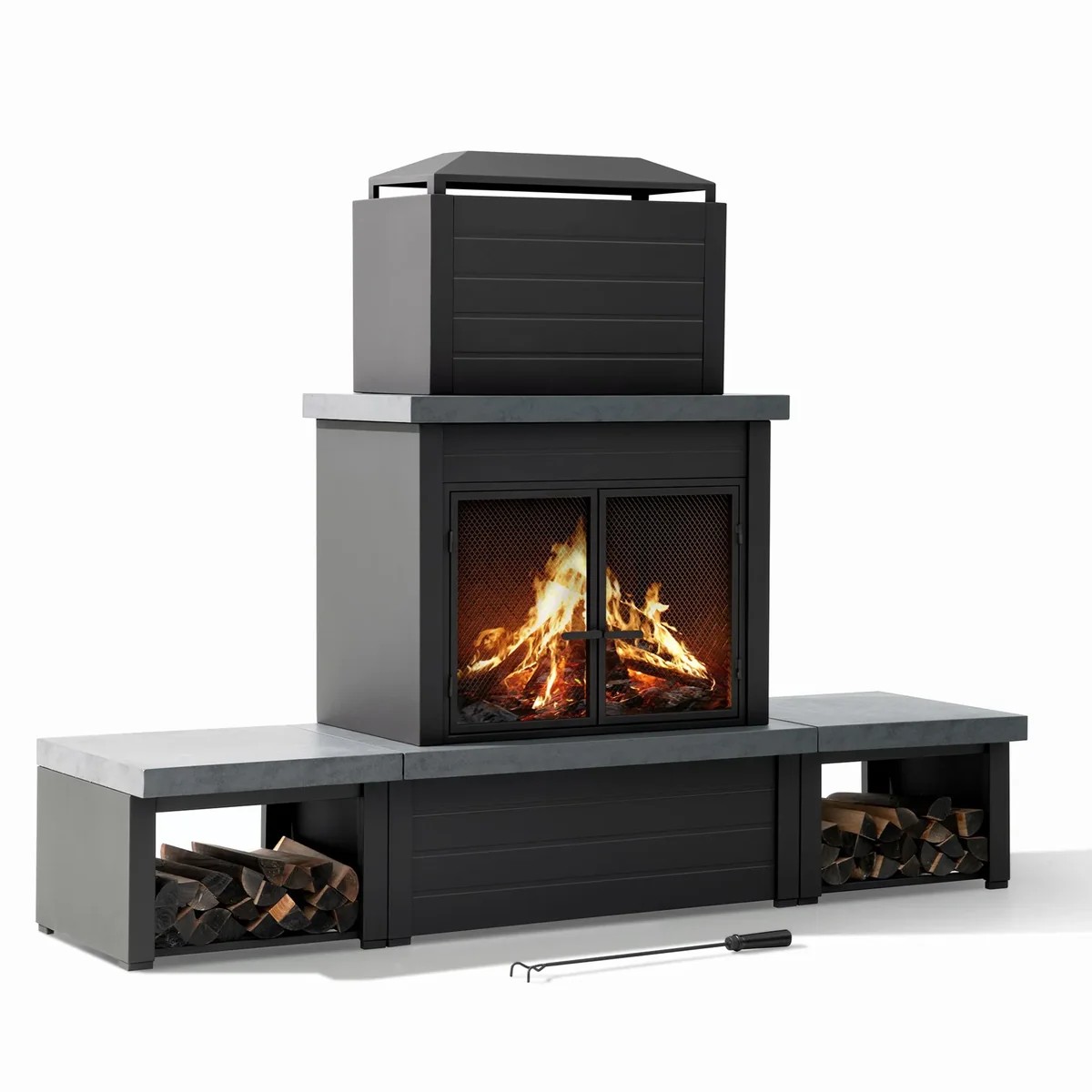
The Nordic Modern Wood Burning Fireplace with Log Holders 76″ – Light Gray demonstrates how several features can be integrated into one larger outdoor focal point. Its 76.18-inch-long, 20-inch-wide, 58.1-inch-high steel construction combines a central fireplace with two side log holders. The model also includes a functional chimney, two locking mesh doors, a removable grate and ash pan, a fire poker, and a PVC cover.
Think About Placement And Maintenance
Location has a direct effect on safe operation. Fire features should remain away from combustible walls, overhanging branches, structures, and furnishings according to the manufacturer’s clearance instructions and applicable local rules.
Wind direction can influence where smoke travels. A location that seems comfortable during calm weather may become unpleasant when prevailing winds carry smoke toward seating or the house. Observing typical wind patterns can help identify a more suitable position.
Maintenance begins after the fire has fully cooled. Ash should be removed according to the product instructions, while mesh doors, grates, chimneys, and exterior surfaces should be inspected periodically. Outdoor covers can help protect eligible models from rain, dust, and UV exposure between uses.
Match The Design To The Outdoor Space
Scale should correspond with the size of the patio and the number of people typically gathered nearby. Oversized heating equipment can crowd a compact seating area, while a small unit may not provide the visual or functional presence expected in a larger backyard.
The surrounding furniture deserves consideration as well. Seating should provide enough distance from the heat source, and pathways should remain open for people carrying food or drinks. Fire features work best when they become part of the layout rather than an obstacle placed in the center of it.
Aesthetic choices can also influence long-term satisfaction. Contemporary steel fireplaces may complement modern patios, while fire bowls and traditional designs can suit more relaxed landscape styles. Product dimensions, finish, fuel requirements, and maintenance needs should remain more important than appearance alone.
Conclusion
Useful fire-feature comparisons begin with practical questions rather than promotional claims. Fuel type determines how the fire is started and maintained, while construction, spark control, chimney design, ash management, and placement influence everyday use. Reviewing fire pits for sale becomes much easier once those criteria are established and matched against the intended patio environment. SUNJOY‘s outdoor fireplace range shows how features such as locking mesh doors, removable ash pans, chimneys, and built-in log storage can address specific outdoor-heating needs without making every product identical.