

Solar water pumping projects require equipment that matches local sunlight conditions, pump specifications, and daily water demand. For agricultural irrigation, livestock watering, and remote water supply, controller selection directly affects pumping efficiency and operating stability.
Choosing a solar inverter company involves more than comparing product prices. B2B buyers should examine motor compatibility, solar energy management, protection functions, and technical support. These factors help determine whether a supplier can meet the requirements of specialized pumping applications.
Understanding Specialized Pumping Requirements
Different water pumping applications have different operating demands. Agricultural irrigation may require extended daytime operation, while livestock watering systems often depend on storage tanks. Pumping head, flow rate, and motor characteristics should be reviewed before selecting equipment.
The motor’s rated power, voltage, current, and frequency provide the starting point for controller selection. Buyers should also check the pump type and expected operating range. Incorrect matching can reduce pumping performance or create unnecessary mechanical stress.
For projects requiring variable motor speeds, a high-frequency solar pump inverter should be assessed according to its supported frequency range. Higher frequencies do not automatically increase usable water output. Pump design and motor operating limits must also be considered.
Why MPPT Performance Matters
Solar panels produce different amounts of electricity as sunlight changes. Morning conditions, cloud cover, and seasonal variations affect available power. Solar pumping controllers must adjust their operation to these changes.
Maximum Power Point Tracking (MPPT) helps extract usable energy from photovoltaic panels. It adjusts the electrical operating point according to available solar power. Effective MPPT control can support more consistent pumping during changing sunlight conditions.
Motor control technology also influences system performance. By adjusting motor speed, the controller can match pumping operation with available energy. However, actual water delivery still depends on hydraulic resistance, pump efficiency, and installation conditions.
When evaluating a solar water pump controller, buyers should examine its MPPT functions and motor control capabilities. Technical documentation should explain how the equipment responds to changing photovoltaic input and whether it supports the intended pump configuration.
Electrical Protection and Operating Stability
Remote pumping installations can be difficult to maintain. Electrical faults may interrupt irrigation or water supply, while repair work can involve additional travel and labor costs. Protection functions are therefore important during equipment evaluation.
Over-current and short-circuit protection help limit damage caused by abnormal electrical conditions. Over-voltage protection addresses excessive voltage, while over-temperature protection responds to excessive equipment temperatures.
Phase loss protection is also relevant for compatible motor systems. Buyers should examine the available protection functions and understand how the controller responds when faults occur.
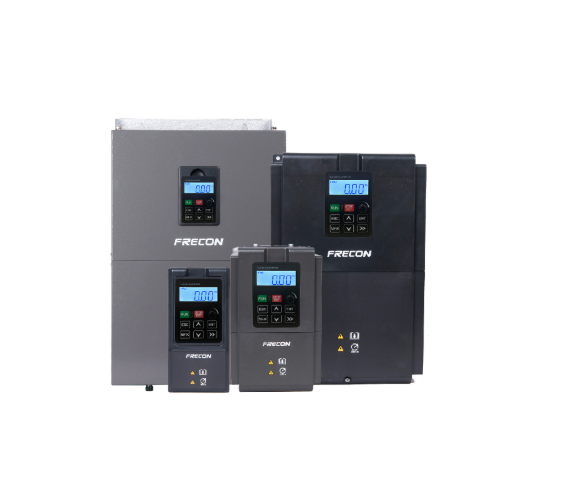
These considerations can be illustrated by the PV500 Series Solar Pump Inverter from FRECON. The product includes over-current, over-voltage, phase loss, short-circuit, and over-temperature protection. These built-in functions help reduce equipment damage risks and downtime associated with electrical faults.
Battery-Free Pumping and Water Output
Some solar pumping systems operate directly from photovoltaic panels without battery storage. This arrangement is particularly suitable for applications where water can be pumped during daylight and stored for later use.
Battery-free operation reduces the need for battery installation, replacement, and maintenance. However, water output remains dependent on available sunlight. Storage tanks may be necessary when water demand continues after sunset.
The PV500 Series supports direct solar-powered pumping without requiring batteries. Its MPPT algorithms and motor control technology are designed to deliver higher water yield under the same environmental conditions.
Buyers should still calculate daily water requirements, pumping head, and expected solar generation. These calculations help determine whether the selected equipment can meet practical operating demands throughout different seasons.
What Should Buyers Examine in a Manufacturer
Technical capability is an important consideration when selecting a supplier. Buyers should request detailed specifications covering photovoltaic input, motor compatibility, control functions, and installation requirements.
Product development capability also matters for specialized applications. Manufacturers with their own product designs may offer clearer technical documentation and more direct communication about equipment functions.
For example, FRECON operates primarily through its own brand model while also offering ODM capabilities. This combination is relevant to distributors and equipment buyers seeking established products or customized development arrangements.
When comparing a solar inverter company, procurement teams should also evaluate technical communication, product documentation, and support arrangements. These factors help buyers identify potential compatibility issues before equipment is purchased
Matching Equipment to Installation Conditions
Controller specifications must be checked against actual site requirements. Engineers should calculate pump power demand, photovoltaic array capacity, pumping head, and expected daily water consumption.
For a high-frequency solar pump inverter, motor frequency compatibility requires particular attention. Operating beyond the pump’s suitable range may increase mechanical stress without delivering useful hydraulic improvements.
Installation conditions should also be reviewed. Ventilation, cable connections, grounding, and environmental exposure can influence equipment operation. Buyers should confirm relevant installation requirements through manufacturer documentation.
The selected solar water pump controller should match both electrical and hydraulic requirements. Comparing technical specifications against project calculations provides a practical basis for equipment selection.
Making a More Informed Procurement Decision
Supplier selection should begin with verified project requirements rather than price comparisons alone. MPPT performance, motor compatibility, protection functions, and installation support all deserve attention.
Before purchasing, B2B buyers should request technical documents and confirm equipment compatibility with their pump systems. This process helps identify unsuitable configurations early and supports more informed procurement decisions for specialized solar pumping projects.